
Drinking Water Sources
In Sudbury, surface water and groundwater are the primary water sources that we draw drinking water from.
Surface Water
Much like gravity is the driving force behind precipitation, it also influences rain, melting snow and stormwater to flow towards lower lying land depressions, accumulating as streams, rivers, ponds, and lakes. Surface water is the term used to describe water that is located above the grounds surface, and it is found all over the world in a variety of different environments!
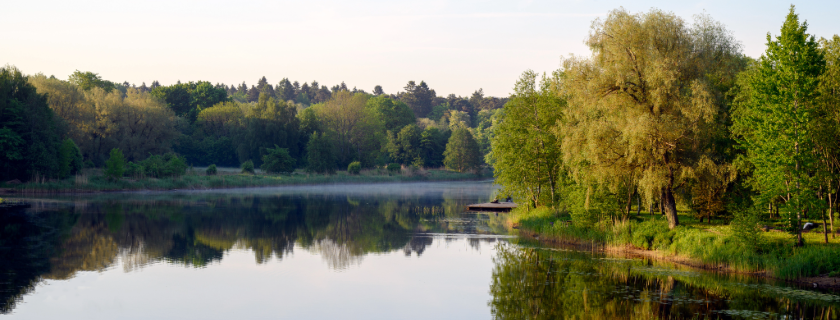
In Sudbury one out of every five hectares of area is covered by surface water. The Sudbury area is comprised of 330 large lakes, three major river systems and many wetlands.
Ground Water
Similar to how melting snow, rain and stormwater recharge surface water sources, water also penetrates though the soils surface, percolating into the grounds saturated zone, in a process known as groundwater recharge (Canada.ca). The physical process of water penetrating the surface of the ground is called infiltration, while percolation is the term used to describe the movement of water through the soil.
Primary zones where groundwater is found
- The unsaturated zone is the most superficial region beneath the ground surface that contains both water and air pockets.
- The saturation zone is the deeper region of the ground where all the space between soil material is filled solely with water.
The border between both zones is known as the water table and its depth below the surface of the ground can vary from just a few feet to hundreds of feet in depth.
How water percolates through the ground
- Porosity is a natural property of every material and refers to the amount of empty space that exists within a given material. Different soil types will have varying amounts of space between rock material that will allow air and water to penetrate through it.
- Permeability is another natural property of materials, and it refers to the connectivity between pore spaces in a material. Permeability dictates how easily fluids can flow through material while porosity refers to the size of the pores within a material.
As climate change progresses in the coming years, it is anticipated that the Greater Sudbury region will experience fewer annual wet days, creating more dry conditions throughout the year. Though precipitation is expected to become less frequent, the occurence of extreme rainfall events is predicted to become more prevalent.
Prolonged drought conditions cause the ground to become more compact. Consequently, stormwater quickly travels along its surface rather than filtering through the ground, eroding soil while picking up sediment (sand, clay, and silt), environmental toxins, chemicals, and germs before flowing directly into streams, rivers, lakes, or municipal sewer drains.