
Animals on Board
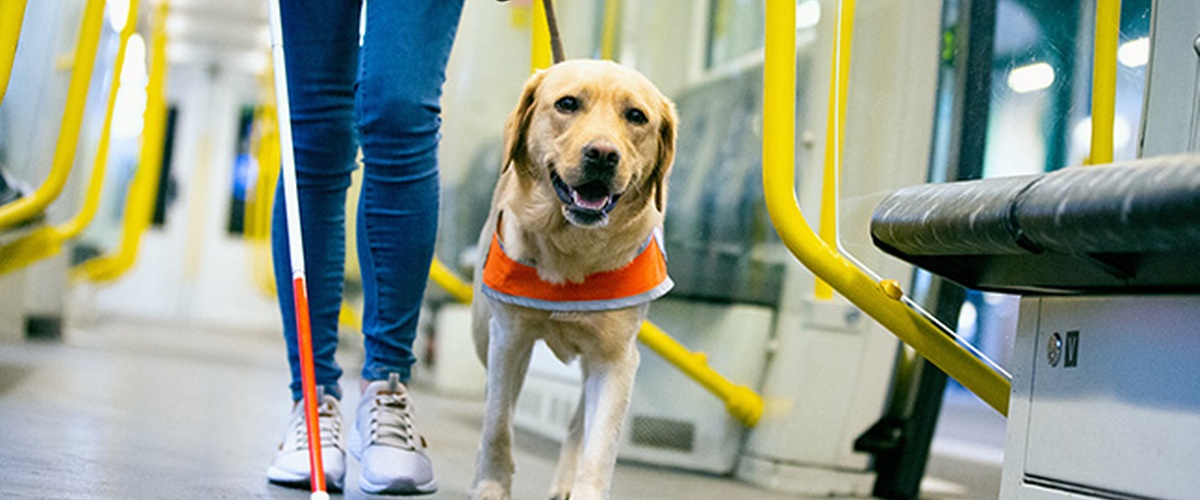
GOVA Transit is committed to ensuring safe, accessible, and inclusive service for all riders. The following policy outlines the rules for travelling with Guide Dogs, Service Animals, Therapy/Emotional Support Animals, and personal pets.
Guide Dogs and Service Animals (AODA)
Under the Blind Person’s Rights Act and the Accessibility for Ontarians with Disabilities Act (AODA), Integrated Accessibility Standards Regulation (IASR), Guide Dogs and Service Animals are trained working animals that assist people with disabilities by performing specific tasks.
Examples of these tasks include (but are not limited to):
- Guiding individuals with vision impairments
- Alerting individuals with hearing impairments to sounds or hazards
- Pulling a wheelchair
- Retrieving items
- Alerting to seizures or low blood sugar
- Opening or closing doors
Conditions for Travel
Guide Dogs and Service Animals are permitted on all GOVA Transit buses when:
- The animal is readily identifiable (e.g., wearing a vest, harness, or other indicator), OR
- Documentation from a regulated health professional is provided confirming the animal is required for disability-related reasons.
In addition:
- The animal must not obstruct aisles or interfere with the Operator’s visibility.
- The animal must remain under the handler’s care and control at all times.
- The animal must not display aggressive, disruptive, or unsafe behaviour.
Therapy / Emotional Support Animals and Personal Pets
Therapy/Emotional Support Animals and personal pets are not classified as Service Animals under the AODA.
They do not have public-access rights and are treated as pets for transit purposes.
Conditions for Travel
Therapy/Emotional Support Animals and personal pets are permitted only when they meet all of the following requirements:
- The animal must be in a fully enclosed carrying container with a secure closure.
- The carrier must fit safely at the passenger’s feet.
- The carrier must not obstruct aisles.
- The carrier must be placed on the floor only — not on seats, wheel wells, or other surfaces.
- Pet strollers, trailers, and wagons are not permitted.
Education and Enforcement
An education period will be in effect before enforcement begins.
During the education period
- Operators and MLEOs will focus on informing and educating riders about the policy.
- MLEOs will support broader public awareness efforts.
- Animals displaying aggressive behaviour will continue to be removed immediately.
After the education period
Formal enforcement by MLEOs will begin. This includes:
- Denying boarding to riders with pets or Therapy/Emotional Support Animals not in an appropriate carrying container.
- Continued removal of animals showing aggressive or unsafe behaviour.
Please be advised that Municipal Law Enforcement Officers and Transit Staff may request that documentation from a regulated health professional be provided confirming the animal is required for disability-related reasons should it not be readily apparent that the animal is a Guide Dog or Service Animal.
Requests for Accommodation
If a rider disagrees with an animal classification decision or has questions about the policy, they may contact 3-1-1.